Showing posts with label Propaganda. Show all posts

Tuesday, 23 February 2016

Pecunia non olet

Though the name of this blog has its roots in medicine my interest has become more general. In fact, I seem to be more and more interested in the maltreatment of science and how certain factions prefer misrepresenting the facts to serve their ideology.

Just recently have I written about an exposé showing science is for sale. Meaning, you can now buy the outcome you require to protect your financial interests. Unsurprisingly there are more examples to add to that unethical behaviour.

As I initially observed, Emilie Udell for the Center for Public Integrity reported how
Critical Reviews in Toxicology and Regulatory Toxicology and  Pharmacology 
 are the go-to journals for
misleading, industry-backed articles that threaten public health by playing down the dangers of well-known toxic substances such as lead and asbestos. The articles often are used to stall regulatory efforts and defend court cases.
The article showed how the asbestos industry bought scientists to opine the link between asbestos and mesothelioma is in dispute. For an explanation on the technique used see manufactroversy.

Climate Progress updates the #Exxonknew-meme  by reporting and showing a reportage by Frank Capra from 1958:
In this film, Dr. Research (Dr. Frank Baxter) explains to The Writer (Richard Carlson) that unrestricted carbon dioxide emissions could lead to a world where “Tourists in glass bottom boats would be viewing the drowned towers of Miami.”
They conclude
Scientists have been warning us about the dangers of unrestricted CO2 emissions, global warming and climate change for over six decades. So much for the myth that climate scientists used to believe in global cooling a couple of decades ago — a myth that has been utterly debunked in the scientific literature (see here). Heck, thanks to excellent reporting by InsideClimate News, we now know oil giant ExxonMobil had been told by its own scientists in the 1970s and 1980s that climate change was human-caused and would reach catastrophic levels without reductions in carbon emissions.
Another example of politicians confusing facts for fiction: voter-fraud. John Oliver shows us the utter fiction of it.

But, this is not about science, it is about politics. By corrupting science the usual suspects are able to sabotage necessary legislation: f.e. to combat smoking related deaths, global warming, gun control, derail vaccination programs, et cetera,

Nevertheless, as I write this we still are defrauded by politicians invoking the "it is nothing more than a global hoax by liberal-commie-nazi scientists"-tactic.

All the misrepresentations by politicians evoke som paranoid response in me: Cui bono? Which leads me to conclude we are in need of some mandatory regulation in politics.
  1. Politicians must be able to say whatever they want. They should be able to make any suggestion, propose or block any law, make any claim they want.
  2. Following their suggestions (to implement, or block, policy/law) it should be mandatory to show evidence of a) the need for this proposal/its refusal, b) the proposal has the claimed effect, c) the claimed effect outweighs the expected negative impact.
  3. For the purpose of ascertaining the available facts politicians themselves are not considered experts in the field. 
  4. The evidence shown can not be "I strongly believe," or "god said so," but has to be based on a review by an independent expert in the relevant field. This expert has to a) share with us the mainstream view among the relevant experts, b) state that in case of any discrepancy between the politicians statement and communis opinio among these experts this is entirely reasonable and reflects an actual debate among experts, c) in case of politicians withholding  such studies they are obliged to mention the result and reason behind not mentioning it.
  5. In the absence of verifiable evidence politicians are obligated to either withdraw their suggestions/comments or admit they are only sharing their private opinion and that layman opinion is more important than evaluation by people with real knowledge: otherwise known as experts.
  6. Any proposal based on non-expert guestimation shall be publicly presented as make believe or truthiness
  7. Akin to nearly every other profession I would suggest accountability in case of policy that can not be reconciled with expert opinion, or lacks reasonable arguments to ignore the patently fallacious solution presented.
Concluding I think there is to much room for misstatements regarding science, and we should better protect society against those who mislead us for personal gain.


Friday, 2 October 2015

Politics vs. Reality

My view on countries is that they are nothing more than oversized companies, shops if you will. We all agree that running a company boils down to being a good manager. One has to ensure there are enough resources, cheese, or toilet paper. In case of illness make sure there is a replacement. The primary goal being the survival of the enterprise. Case in point, opening a restaurant is not the same as knowing how to run it. The reason is you have to understand what the best course of action is to be a restaurateur, not which menu fits your personal believe system.

In the same vein to adequately run a country one must differentiate between ideology and verifiable reality. Just like rational people emphasise the need to adhere to science in medicine we should not ignore the wider effects denialism (more here) has on society.

The audacity with which politicians blatantly posit fact-free "facts" is both impressive as it is disheartening. Stranger still is the observation the general public lets them get away with that. Evidence critical thinking skills should be part of our educational system. Although, it might not be as simple as introducing accurate information to correct reality-challenged opinions, enter the backfire effect (PDF).

Thinking of examples is easy, one can mention the follwing falsehoods, that remain "unresolved" controversies to this day. In light of the numerous stories refuting their premise voters remain annoyingly loyal adherents to these peddlers of humbug, a result that to me is utterly unpalatable.

Global Warming
Confronted with all the scientific evidence supporting the position the earth is warming and humans are part of the cause, special interest groups have reacted with an assault on the science and have been able to make us believe there still is doubt, doubt which politicians use to sabotage necessary reforms.

In short, politicians keep repeating the factually incorrect claim that the science is not settled.

To make things worst AP has decided that calling people who deny the science "denier" is no longer allowed. Yet again proof of journalism refusing to report facts.

Capitalism
We all know how the free market has made us all extremely happy. The notion that government is out to prevent us all from making money has led to deregulation. Luckily, the removal of laws preventing some to become obscenely rich has made our lives alot easier

Part of protecting our right to make money the world has envisioned a free trade agreement (TTIP) presented as a solution to our economic woes to come. My biggest problem with it is the lack of transparancy. Meaning: nobody, except the lucky few, are allowed to see what this agreement entails. Because of that many have voiced opposition, even observed it threatens democracy itself. How? I see you think. Should a country enact laws which might impact expected revenue, (think smoking, food, cars, et cetera), the affected company may sue the country in what in essence is a secret court: the National sovereignty and investor-state dispute settlements (ISDS), more here, here, here, here, here, here and here. Many fear this will be an incentive not to enact consumer protective laws. Which, if you are VW, is a good thing.     

Another truism among monetary wizards is the notion that reducing taxes on the rich, paired with lower wages/increased taxes on the rest of us plebs, stimulates the economy, better known as trickle down economics


Too Big to Fail, and Jail 
After convincing politicians to remove our protections against a financial collaps, completely unexpected the world was on the brink of disaster as the economy crashed. To avert the end of times politicians decided to rescue the financial world because it was impossible to let them go bankrupt.

The concept "too big to fail" is something I do not subscribe to. But, as I have no background in economics, I will not force my opinion upon you. So, conceding the premise the logical next step is to reduce the size of our financial institutions and update their ethics. This is something politicians have refused to mandate. In addition to that we have seen a reluctance to either investigate or sufficiently punish widespread criminal behaviour.


Guncontrol
This is aimed at politicians that refuse to acknowledge reality surrounding the unlimited availability of murder tools. Despite impressive results of curtailing gun ownership in other countries. But ideology, and hysteria, trump common sense, and emperical data showing gun control works. Worse, because of politics we are no longer allowed to even collect and analyse data pertaining to gun violence.  


Terrorism
Following the attacks on the US of A in 2001 politicians claimed this attack, WMD and support of international terrorism meant they had to invade Iraq. While already evident before the invasion those politicians ignored the evidence refuting those claims which simultaneously pointed to the actual culprit.

Even today we fail to recognise our role in creating Islamic State by destabilising the region and supporting one of the worst regimes around today. The entire notion that "war" is the solution to complicated sectarian conflicts is risible. Strangely enough we are shocked when this non-diplomatic approach to solving global challenges causes another catastrophe. Needless to say, nobody ever remembers how things got started, or how human rights are just bargaining chips. Worse still, after history has proven you do not know what you are talking about we happily listen to your insights yet again.

Coincidentally, the inflated fear of those "men with beards and funny names" has opened up opportunities for those interested in making some money and those that feel civil liberties are overrated anyway. Which most of us think is just fine.


For years I have wondered how it is that politicians are able to make a plethora of incorrect statements without the possibility of correcting them. Looking at the rest of society I notice all the jobs I am aware off have some kind of quality control. For whatever reason politics knows no such system. Despite the tedious political debates presented as such we have no objective means of steering the political process back to reality.

Would it not be great if we finally get to implement measures to save the planet and thereby ourselves, or if we stop wasting resources on solving problems that do not exist?

What if we implement some quality control measures to check whether politicians espouse reality-based opinions. The Baloney Detection Kit: Carl Sagan’s Rules for Bullshit-Busting and Critical Thinking seems like a good place to start. We can steal some of his suggestions and turn those into the following: 
  1. Politicians must be able to say whatever they want. They should be able to make any suggestion, propose or block any law, make any claim they want.
  2. Following their suggestions (to implement, or block, policy/law) it should be mandatory to show evidence of a) the need for this proposal/its refusal, b) the proposal has the claimed effect, c) the claimed effect outweighs the expected negative impact.
  3. For the purpose of ascertaining the available facts politicians themselves are not considered experts in the field. 
  4. The evidence shown can not be "I strongly believe," or "god said so," but has to be based on a review by an independent expert in the relevant field. This expert has to a) share with us the mainstream view among the relevant experts, b) state that in case of any discrepancy between the politicians statement and communis opinio among these experts this is entirely reasonable and reflects an actual debate among experts, c) in case of politicians withholding  such studies they are obliged to mention the result and reason behind not mentioning it.
  5. In the absence of verifiable evidence politicians are obligated to either withdraw their suggestions/comments or admit they are only sharing their private opinion and that layman opinion is more important than evaluation by people with real knowledge: otherwise known as experts.
  6. Any proposal based on non-expert guestimation shall be publicly presented as make believe or truthiness
  7. Akin to nearly every other profession I would suggest accountability in case of policy that can not be reconciled with expert opinion, or lacks reasonable arguments to ignore the patently fallacious solution presented.
Yes, I realise we now get into Through-the-Looking-glass territory:
The asnswer is: we employ a system that optimises the objectivity of politics and minimises ideological influences. Just as we are used to in the rest of society: think regulations for the automotive industry, hospitals, construction industry, your local restaurant, hotel, et cetera.

Anyway, the goal is to make visible that politics is not seldom based on wishful thinking if not good old-fashioned smoke and mirrors. Who knows, it might even reduce political disputes as it limits the possibility to abuse reality without getting corrected.

Feel free to augment/amend my proposal in comments.


Update: Unfortunately we have an oportunity to see whether politicians are willing to choose society over ideology. What will the response be to Obama pleading:
"Obama appealed to voters to elect politicians committed to strengthening gun control and to gun owners to ask themselves whether organisations such as the National Rifle Association, which pour large amounts of money into lobbying against restrictions, are really serving the interests of those who use weapons for sport and hunting."
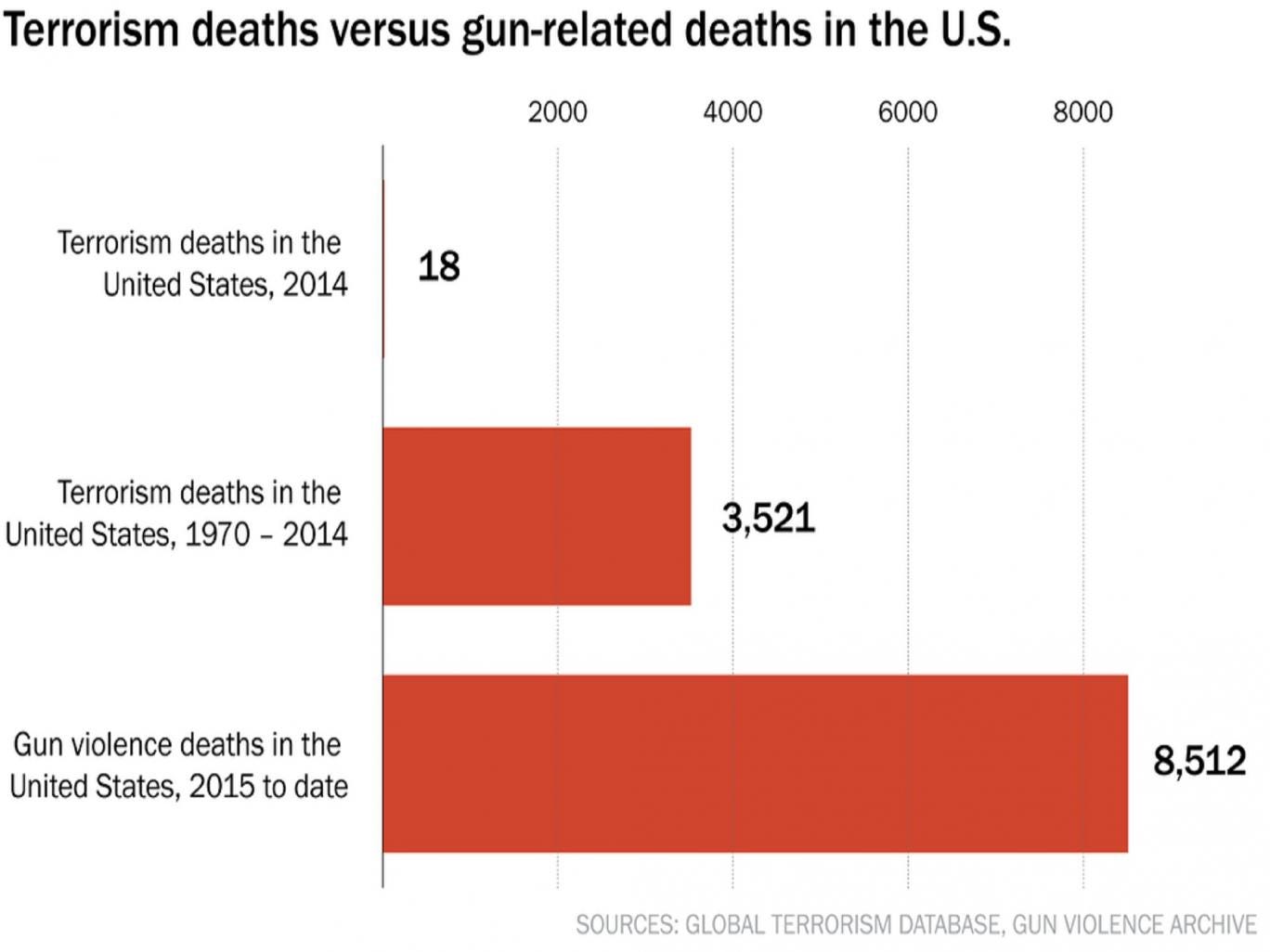
Obama also asked to compare the effects of gun violence and terrorism.
 Will politicians choose the facts-based approach? Not holding my breath.

Sunday, 28 August 2011

Agnotology: or denialism as policy

When I entered medical school I strongly believed that knowledge was the answer to most, if not all, problems. By the same token I thought that in any debate, just offering your opponent a well-supported argument had to lead to its acceptance.

Not so. Apparently, for psychological reasons humans reject evidence that contradicts strongly held beliefs. Hence the need for denialism. Because of that I coined the phrase: there is no cure for stupidity. As I remarked before, there are two sides to that coin. One, there are those that sincerely refuse to accept scientific facts, mostly through lack of understanding. Eventhough studies show increasing their knowledge does not help, I sincerely hope it does. Unfortunately, they evade venues that offer critical thinking courses.

Unfortunately, there is another group. They do not reject science, they understand and accept it. However, their monetary gains, religious and political powers, are severly damaged should certain scientific facts become known and accepted by the general public. To protect profitable companies, policies, et cetera they attempt to keep uncomfortable information hidden, and are actively aided by politicians. And if that does not work they soften the blow by pointing out the science is not settled, or even making us distrust science.
We were first shown that tactic by the tabacco industry (PDF) , which despite increasing evidence smoking is detrimental to our health, made it possible to stall legislation. Their trick: manufacturing scientific doubt.

Following that success new acolytes appeared: global warming does not exist, vaccination kills, evolution is merely another opinion, the financial industry Ponzi scheme, non-medicine-medicine, only plebeians commit crimes, we guarantee your safety, privacy will be the end of us all, militarism and ignoring the law breeds democracy. The recurring theme is misinformation, misrepresentation, and fullblown denialism.

Putting as many sticks as possible in the wheels of the bicycle called science has become a major strategy which is detailed in Merchants of Doubt. The cause is self-evident: if people hear smoking kills you lose customers, once evolution is accepted and the bible is proven to be a set of fairy tales that book can no longer be used to indoctrinate the rabble, if global warming is true you need to make costly adaptations to factories and cars, if security theatre does not prevent terrorist attacks we won't spent billions on the military-industrial-complex incarnation called security firms.

That technique of creating confusion is known as agnotology. According to Dah Wiki this:
is the study of culturally-induced ignorance or doubt, particularly the publication of inaccurate or misleading scientific data.
The term was invented by Robert Proctor in 1992. An example is given by Stéphane Foucart for The Guardian:
A famous internal memo issued by the US cigarette manufacturer Brown & Williamson put it bluntly: "Doubt is our product." The campaign by the tobacco industry to spread ignorance, which became a deliberate ploy in the 1950s, has since been copied in other fields.
Hmm, doubt as a product, where have I heard that before?

Today the intertoobs are a highly effective method of disseminating misinformation. There are numerous echo chambers promoting "alternative views" by experts without knowledge. Countering the deliberate manufacture of debate becomes increasingly difficult. Especially when exposing those fabricating facts results in abuse like the recent unpleasantness.

Not only facts are misrepresented, also language is conscripted  in this war on reason. Something Orwell years ago explained to us, which is why today we call such abuse of language Orwellian.

The sad thing is I expect powerful factions to mislead in order to gain money and power, I have been turned into a cynic by Il Principe combined with a lack of interest in the latest Hollywood gossip. What annoys me is that the one institute whose raison d'être should be exposing such blatant fraud is refusing to do so. Or, in the case of one news organisation, participating in the scheme to mislead us. Commenting on the P.R.-departments we call media David Roberts writes:
There's one thing we haven't learned from climategate (or death panels or birtherism). U.S. politics now contains a large, well-funded, tightly networked, and highly amplified tribe that defines itself through rejection of "lamestream" truth claims and standards of evidence. How should our political culture relate to that tribe?
We haven't figured it out. Politicians and the political press have tried to accommodate the shibboleths of the right as legitimate positions for debate. The press in particular has practically sworn off plain judgments of accuracy or fact. But all that's done is confuse and mislead the broader public, while the tribe pushes ever further into extremity. The tribe does not want to be accommodated. It is fueled by elite rejection.
At this point mainstream institutions like the press are in a bind: either accept the tribe's assertions as legitimate or be deemed "biased." Until there is a way out of that trap, there will be more and more Climategates.
Confronted with such opposition to change, i.e. advancement of knowledge, I am reminded of my school days. During physics lessons Lenz's law was introduced to me.
An induced current is always in such a direction as to oppose the motion or change causing it.
Add to that a pinch of Newton:
To every action there is always opposed an equal reaction.
which completes my version of quantum-woo to explain The Force is behind the anti-science movement.

Update: Added image borrowed from Waldenswimmer.

Update II: Yet another brilliant picture from Joe Romm, for Think Progress:


Nice flow-chart of The Denier Industrial Complex.

Tuesday, 8 March 2011

Ideology using legalities to stifle scientific critique

Throughout history many have found ideology to be a trustworthy window on reality. As such it is the basis of many misconceptions. When science increased our knowledge of the world surrounding us inevitably this contradicted many beliefs. The solution people have found to that contradiction is the following:
  1. Confronted with evidence your opinion is flawed you amend your view accordingly
  2. Confronted with evidence your opinion is flawed you amend (read: ignore, or misrepresent) the evidence accordingly.
Anyone interested in sanity, and reason, will adopt option 1. Of course, the anti-science movement, without exception, chooses option 2.

This is because the intrepid ideologue will start by simply denying anything that contradicts his/her erroneous opinion since the Galileo-gambit proves he/she is right. This method is not without risks. More and more people realise they are the victim of propaganda. Another avenue for maintaining your discreditied position is legal bullying. As we have seen, in the case of Simon Singh, litigation -using the U.K.'s libel laws in particular- is a preferred method, employed by cranks, of removing science-based criticism from public discourse.

The latest incarnation of the "let's-prohibit-those-pesky-reality-based-objections-to-our-nonsense"-method resulted in cancelling the publication of Paul Offit's latest book Deadly Choices: How The Anti-Vaccine Movement Threatens Us All. It is discussed by Orac describing how he:
found out about this when a British blogger, who had been originally sent a copy of Dr. Offit's book to review, received an e-mail from Dr. Offit's British publisher, Basic Books, requesting the review copy back and informing the blogger that "for legal reasons we have had to cancel the publication of this book." I had to tell the blogger that I had no idea what this was about, but it didn't take me long to find out that Richard Barr was threatening legal action against Perseus over one sentence.
He continues to note:
that usually the goal of cranks is not to win a judgment, but to shut down criticism by any means necessary. To that end, even though it would have been pretty pointless for Barr to sue Dr. Offit directly, legal threats against his U.K. publisher are very effective. All Barr has to accomplish is--if you'll forgive the term--to raise the bar on the costs of publication to the point that publishing Dr. Offit's book can't be profitable. Given the low profit margin of most books, likely Dr. Offit's included, a few legal fees spent to fend off threats like that of Mr. Barr go a long way towards discouraging publishers from publishing critical or controversial books. That's the point.
Unfortunately, the anti-science movement, like Hydra, appears impossible to debilitate. The purveyors of woo disingenuously invoke freedom of speech to make the most outlandish claims, while simultaneously insisting that this right does not apply to those pointing out these claims are factually incorrect. One can only hope Libel Reform will be effectuated before more attempts are made to keep the public from knowing experts have debunked the medieval beliefs promoted by the anti-science brigade.

In the mean time, whenever you see an organisation/individual, engaged in making controversial claims, trying to limit the availability of information exposing possible misstatements on their part be very sceptical towards those claims. Especially regarding health related claims where they simultaneously, yet always coincidentally, sell something related to that "controversy."

Update: Then again, "I'll sue you" is so 1980's. To show your superior intellect in the 21st century you need to use a more sophisticated method of bullying, enter the Distributed Denial of Service Attack (DDoSA). Scienceblogs, a source of science information, is the latest to come under attack. Details by Greg Laden, Pharyngula, Aardvarchaeology, Orac, Mike the Mad Biologist.

Friday, 18 February 2011

Propaganda posing as journalism

My interests are very diverse. Much of what I might want to share is done by others, and probably better. Medicine and quackery are covered by -among others- Orac, Steven Novella, Science-Based Medicine, and PalMD. Scienceblogs, Scientopia for science in general. Analysis of U.S. Policies regarding the War of Terror can be found at Glenn Greenwald's blog. Information on Global Warming can be found at Skeptical Science, Open Mind, Watching the Deniers. For other suggestions look at my blogroll.

Though I try and discuss whatever has caught my attention it is impossible to ignore the absolutely inadequate, bordering on willfully ignorant, stories presented to us by the media. Regardless of the topic you will find journalists are:
  1. Insufficiently schooled to appreciate the intricacies involved, as such they fail to intervene when factually false statements are made,
  2. Insufficiently schooled to evade, or expose logical fallacies,
  3. Insufficiently aggressive to confront powerful interviewees with inconsistencies, factual inaccuracies, or logical fallacies, (just imagine their special status being revoked, thereby limiting their access to the inner circle)
  4. Frequently employed to disseminate the talking points of politicians and religious leaders, also known as propaganda, see point 3,  
  5. Trained to obey the wish of their government (an offer they can't refuse?) to conceal information negating statements made by said government,
  6. Not inclined to ask for expert advise, when confronted with the previous points, because they are abundantly unaware of the limits their knowledge has,
  7. Inherently disinclined to support anyone who forgets to adhere to the above, i.e. those who engage in actual journalism 
With that in mind I am genuinly surprised that any selfrespecting individual would dare to claim to be a Serious Reporter while adhering to those principles. That is, it is not as if they act like those amateuristic bloggers who never fact-check and lack any credentials to be considered trustworthy.

Of course, newsorganisations have to cut down their costs and inevitably the number of (qualified) journalists goes down. As a result the public feels they become untrustworthy, which in turn makes them buy less newspapers. This leads to more lay-offs, as income for newsorganisations keeps dwindling. Under these circumstances I propose a radical thought: invest in quality journalism, even the investigative kind. That is, create the environment needed to present a factual and accurate story, as opposed to ideology driven misinformation. Naive as I am I would not be surprised if this would increase their audience. Why else are people reading blogs and fora? They still want to know things. And no, not only about who does so and so with whom.

Scary thought: what if news reports go beyond hollywood scandals, petty gossip, propaganda and turn out to actually contain existential topics using real experts; i.e. global warming does exist, Intelligent Design is inherently unscientific, vaccines do not cause autism, the exaggerated threat of terrorism is used to abolish civil rights, et cetera.

One can, and should, dream.

Update: Added point 5. You will note that the linked article there is an example of combining point 4 and 5 in an attempt to shape public opinion. Also known as Psyops.

Update II: It is becoming tedious, but Glenn Greenwald again notes the principal thing journalists consider to be in their job description: never reveal actual information but actively strife to keep it hidden from the public while dutifully reporting the propaganda. Or, in his words:
That's what our establishment media outlets largely are for:  to disseminate and amplify the messages of our most powerful political, military and financial factions without any accountability.
His article also clarifies that today the widespread use of "anonymous" sources is essential to ensure nobody can be held accountable for evidently false statements, even as they drive the perception of things. Quoth Glenn:
Anonymity does have a valid purpose in journalism:  its legitimate purpose is to protect the vulnerable and powerless when they expose wrongdoing by those who wield power. But most establishment journalists have completely reversed that, so that anonymity is used to protect those with the most power: to enable them to make all sorts of public claims and launch all kinds of attacks on critics without being accountable. When anonymity is used for those purposes, it is inherently and incomparably corrupt (that, of course, is the dynamic that led to public acceptance of patently false claims justifying the Iraq War). But this perversion of anonymity from what it was supposed to be (a means of holding the powerful accountable) into a power-shielding weapon is simply a microcosm of the broader reversal by establishment journalists of the old dictate to "afflict the powerful and comfort the powerless." Most establishment journalists -- by definition -- do exactly the opposite, and their eagerness to indiscriminately grant anonymity to the nation's most powerful officials is simply one manifestation of that power-serving mindset.
Contrast that with the way anonymity of whistleblowers is respected. But hey, let's not forget not forget how hard it is to be a Real Journalist. You need to fact-check, use your elaborate journalistic skills, and above all you need to refrain from taking sides!

Update III: The claim Real Journalists are objective, as opposed to those unprofessional bloggers, is shattered by Jack Goldsmith, according to Glenn Greenwald. Apparently U.S. media feel their duty is to show allegiance to the U.S. administration:
... allowing such loyalties to determine what one reports or conceals is a very clear case of bias and subjectivity:  exactly what most reporters vehemently deny they possess.  Many establishment journalists love to tout their own objectivity -- insisting that what distinguishes them from bloggers, opinionists and others is that they simply report the facts, free of any biases or policy preferences.  But if Goldsmith is right -- and does anyone doubt that he is? -- then it means that "the American press" generally and "senior American national security journalists" in particular operate with a glaring, overwhelming bias that determines what they do and do not report:  namely, the desire to advance U.S. interests.
He then notes:
A desire to promote American policy or its "interests" will often directly conflict with core journalistic obligations.  It's often the case that disclosing the truth about the American government (a journalistic duty) will undermine the government's policy aims or subvert government "interests."  The same is true for serving as an adversarial watchdog on government officials: exposing their false statements and lies, uncovering their corruption and deceit, contradicting their propaganda; doing that can also undermine American interests.  Reporters who engage in journalism with the goal of advancing U.S. interests or promoting their nationalistic allegiance -- which Goldsmith suggests is the majority of them -- are engaged in activism and propaganda, not adversarial journalism.  That's fine, I suppose, if they acknowledge their biases, but those who are driven by these allegiances while pretending to be "objective" are engaged in a game of deceit.
Usually I write about science, but this intermezzo was meant to show this behaviour, of replicating talking points for ideological reasons while hiding inconvenient information, is not limited to science reporting: i.e. global warming, vaccination, evolution, et cetera. Whatever else is true, journalists are far from objective regarding any topic, which is the point I keep making.

Update IV: Strangely enough the NYT appears capable of "taking sides." Eventhough we have a classic example of a "he said, she said"-situation they have no problem choosing one version over the other. Would that have anything to do with the "controversy" involved?

Update V: After years of being "objective," i.e. not taking sides, the NYT has started writing about waterboarding as a form of torture. Could it be because the alleged perpetrator is not from the U.S.?

Update VI: Another newsarticle incapable of  being accurate, whether its writer is intentionally misleading his readers I leave up to you.

Update VII: To quote Pharyngula:
Science journalists, you really piss me off…at least some of you. Here are a couple of headlines about that recent paper I summarized that make me want to slap someone.

Thursday, 13 January 2011

Facts are overrated anyway

This blog was started to share my thoughts on science, rationality and why they are continuously attacked. Today I am convinced intra-personal psychological processes create the caustic responses from humans that are confronted with scientific conclusions which contradict their ideology.

Even before I began writing this blog I was not impressed by what journalists produce. Knowing a little about medicine I was repeatedly surprised by the either outdated, incomplete, or even incorrect articles I read covering medicine. When I became a resident I was taught how to read, and write, articles. In every hospital I worked we would discuss two articles from medical journals -i.e. NEJM, JAMA, Annals of Internal Medicine, BMJ, Intensive Care Medicine, et cetera- on a weekly basis. By talking about the strenghts, and weaknesses, of the article this has increased my critical thinking skills. Undoubtedly one of the reasons this ritual is part of hospital life.

Unfortunately this is not part of journalist school. As such I wonder how this may influence the viability of nonsensical ideas in society. The type of journalism media currently practice does the general public a disservice by making the "fair-and-balanced"-fallacy a popular point of view. This doctrine increases the dumbing down of society, which has given us numerous absurd opinions. Also, the need for celebrities to engage in misinforming the public has devastating effects. Terri Judd, for The Independent, writes about these effects and on how the public sees manufactroversies. To illustrate the spread of the "I-refuse-to-adequately-inform"-virus, within the media, below are stories covering different topics that fall within the "facts-are-to-be-treated-as-opinions"-category.

Regarding vaccines:
Just recently there was a concerted effort to counter the misinformation being spread by the infectious-disease-promotion-movement. It was hugely successful. So much so that today radiostations have been enlisted to help keep us scared of science. One wonders how effective the fearmongerers would be without the complicit media wich refused to point out the numerous, and huge, inaccuracies being presented as facts. A review by David Gorski of:
two — count ‘em, two! — books taking a skeptical, science-based look at vaccines and, in particular, the anti-vaccine movement.
can be found here. Astonishingly, even after Brian Deer in a leading medical journal concluded the father of the current infectious-disease-promotion-movement, Dr. Andrew Wakefield, made up the article which started the recent anti-vaccination scare journalists refuse to discard the "fair-and-balanced"-doctrine. As Cyril Washbrook, for MediaSpy, reminds us:
As Ben Goldacre notes in a well-known critique of the media's reporting on the issue, the so-called "quality" press stood shoulder-to-shoulder alongside trashy tabloids in peddling fears that lacked a credible basis.
What does the Serious Reporter do?:
But even now, purportedly respectable media outlets continue to trot out their post-modernist, we-shall-never-adjudicate routine, showing that the lessons have not been learned. Step forward, CNN.
A now-retracted British study that linked autism to childhood vaccines is an "elaborate fraud," according to a medical journal - a charge the physician behind the study vigorously denies.
Note the immediate establishment of the basic heuristic: one person says the study is a fraud, the other person says it isn't. Unsurprisingly, the entire article proceeds along these very lines. Wakefield says it's a smear campaign; the BMJ says it's a genuine exposé. Wakefield says Deer has been paid off; Deer says he's independent.
There is no sign journalists realise that informing one's audience about the veracity of claims, not merely reporting the claims themselves, is what journalism should be about.

Regarding the placebo-effect:
We all have heard of the placebo-effect. A recent study suggests we underestimate the power of the placebo. According to what has been reported in the media it works even when patients are aware they are taking fake medicine. Predictably, the popular press has not been sceptical enough, as Orac points out.
I don't have a huge problem with the study. After all, it's a pilot study. The biggest problem I have is with how the study is being sold to the press, as though it were evidence that placebo effects can really be triggered without at least some degree of deception. It shows nothing of the sort.
More on this by PalMD and David Gorski.

Evolution is not science:
Once Darwin irked the religious with his theory their response has been: attack, attack, and attack. The reason for this is clearly their fear science might prove The Bible is not The Truth. One can imagine religion being shown to be nothing more than mythology. The horror. There was initially the Scopes trial and recently through slight of hand, introducing the sciency sounding reincarnation of creationism: Intelligent Design. Despite the fact ID has been shown to violate the basics of science they keep claiming this is proof of an Evil Atheist-plot to take over the world. Surely, the media have come to the rescue by promoting, and continuing, the teach-the-controversy-fallacy. Still, I am waiting for journalists to use this argument to report on the Holocaust-controversy, and the Flat-Earth-controversy.

Regarding global warming:
Despite the fact the science is settled ideologues keep telling us AGW is a hoax. An example of inadequate reporting is Climategate. This purportedly showed a conspiracy of scientists to keep The Truth from us. A fact journalists felt compelled to share with us. After it became abundantly clear this was not the case, and the scientific method was exonerated, the media could not be bothered to share that with us. At least, not with the same zeal, and headlines, as the alleged corruption. 

War of Terror:
The breakdown of journalistic standards became painfully apparent when the Bush administration was allowed to make the wildest accusations towards Iraq. Worse, the media themselves were the main purveyors of misinformation. Even today, while those claims have turned out to be unsupported by the then available evidence, the media are incapable of learning from that experience. Like Saddam then both Iran and Julian Assange are now The Biggest Threat In The World. Again, no questions are asked to counter that premise.

Political discourse in the US:
For decades it has been bon ton in the US, and it is spreading beyond its borders, to use the most antagonistic and inflammatory ways of discussing topics. It is called freedom of speech. In short, use ad hominems and never relevant arguments. Politicians, and newsmedia, have engaged in sharp descriptions of individuals. After Obama became President of the US the Republicans, their ministry of truth, and other supporters have used terms like traitors, terrorists, un-american (and much more) to describe members of the Democratic Party. Then, this week, a Democrat was shot. In light of the recent rhetoric by the political Right some have suggested a correlation with the toxic political climate. While it is difficult to prove any causality one has to be blind to ignore the possibility. In the words of Mike the Mad Biologist:
As I've said before, words do have meaning. Words should have meaning: if they don't, then do us all a favor and shut up. I believe Representative Trent Franks. I believe them when Rush Limbaugh and his millions of regular listeners believe we're the problem. And the anti-abortion movement has shown what happens when people post cross-hairs over people's names.
So let's not be so concerned with civility, but instead demand honesty and accuracy. That will serve us far better.
He also discusses a NYT article, by Matt Bai, on the shooting which employs the usual "but-both-sides-do-it"-meme.
........, John Cole succinctly sums it all up:
And then my personal favorite: "He was just crazy!" No shit. You have to be crazy to walk into a crowd of people and start spraying bullets, killing a bunch of elderly people and a little kid. That is crazy.
The point we have been trying to make for the last couple of years is that Republicans need to stop whipping up crazy people with violent political rhetoric. This is really not a hard concept to follow. There are crazy people out there. Stop egging them on.
The problem Bai has is that, if you report the obvious story--Republicans have been engaged in eliminationist and exclusionary rhetoric that has some of the hallmarks of fascism--there's nothing new there. It doesn't establish you as a 'contrary' thinker who comes up with devastating counterintuitive insights. But if you can 'establish' (even though you actually can't) that the Left does it too, then you have something different to say.
Another comment on the incident is made by We Beasties:
There's been plenty of talk about the violent rhetoric that's been spewed for the last 2 years, and many have blamed talk radio, Sarah Palin's map with cross-hairs over congressional districts (including congresswoman Giffords') and the like, and I don't have much to add on that front. There's been no direct connection, and there may never be, but I find it hard to believe that this atmosphere of violent hatred had nothing to do with this gunman's actions.
If you are wondering how this relates to my criticism on journalism I refer you to the fact-free, and at times delusional, opining by Glenn Beck, Rush Limbaugh, Sean Hannity, Bill O'Reilly, and many others which contributed to this climate. In all fairness, yes: they are not journalists but propagandists. Responding to the "the-guy-must-be-crazy"-view, by David Brooks, We Beasties notes:
Vaughan Bell has a devastating critique of this sort of thinking in Slate, noting that the most complete scientific research on the effects of mental illness show very little increase in risk of violent behavior.
More on mental health and violence can be found here.

Wikileaks exposes journalists as not doing their jobs:
As I noted before without the massive failure of journalism we would not have Wikileaks. Their recent disclosures appear to be based on Bradley Manning, who allegedly confessed to a total stranger, Adrian Lamo. His newfound friend then turned informant, and contacted Wired. Note the curious treatment he recieves while he is supposed to be innocent until proven guilty. This tellingly has led the U.N. to start an investigation.

To aid those favouring all sorts of conspiracies Wired refuses to confirm, or deny, the ever changing narrative being told by Adrian Lamo. Kept hidden from us, by Wired, is how he met Manning and what his relationship is with journalist Poulsen, quoth Greenwald:
That's what so much "journalism" now is:  a means of shielding secrets from the public -- usually to protect friends and the agendas of "sources" to ensure further access.  Ironically, it is that very mentality -- the Cult of Secrecy that American journalism has become -- that gave rise to the need for WikiLeaks in the first place.
He concludes:
The chat logs that Wired has but is withholding -- and about which they are refusing to comment -- are newsworthy in the extreme.  They cannot but shed substantial light on what really happened here, on the bizarre series of events and claims for which there is little evidence and much cause for doubt.  I expect government officials to shield the truth from the public and to conceal key evidence and facts.  But those who claim to be journalists should not be aiding in that effort.  Wired is doing exactly that.
Totally unsuspected the media in general also fail to tell about Wikileaks without incorporating copious amounts of inaccurate statements. How journalists, in this story, have become the voice of the Obama administration's PR-department is described by Greenwald. Of course, Wikileaks does things real journalists never do, they endanger lifes, or this is what we are being told. Therefore we should not be afraid of governments limiting free speech for the real media, who never publish secret information. Strangely enough The NYT itself is now endangering National Security with a new article. In the words of Greenwald:
In The New York Times today, Mark Mazzetti and Dexter Filkins expose very sensitive classified government secrets -- and not just routine secrets, but high-level, imminent planning for American covert military action in a foreign country.
He rhetorically asks:
The question that emerges from all of this is obvious, but also critical for those who believe Wikileaks and Julian Assange should be prosecuted for the classified information they have published: should the NYT editors and reporters who just spilled America's secrets to the world be criminally prosecuted as well?  After all, WikiLeaks has only exposed past conduct, and never -- like the NYT just did -- published imminent covert military plans.  Moreover, WikiLeaks has never published "top secret" material, unlike what the NYT has done many times in the past (the NSA program, the SWIFT banking program) and what they quite possibly did here as well.
Just to remind us of what we have learned because of Dah Evil Wikileaks, which Real Journalists failed to uncover, read this, this, this, and this.

With the above in mind, combined with the numerous examples I left out, what I notice about journalism today is that it does not matter what you are writing about, to be seen as a Serious Reporter the following characteristics are mandatory:
  1. There are always two sides to a story, 
  2. In the absence of any dispute pretend there is one, and present any discredited view as if the topic is still debated: failing to point out opposing opinions is a tell-tale sign of bias, hence point 1,
  3. Never point out any incorrect statements, or factual inaccuracies, by the parties involved: that would be taking sides, 
  4. Never reveal anything that damages those in power, i.e. see the hounding of anybody even remotely linked to Wikileaks. Limit your reporting to nefarious pawns and your career is a guaranteed success. 
  5. Never explicitly admit error on your part,
  6. A source is anyone who shares information with you, regardles of its veracity or factual accuracy,
  7. Expertise, or lack thereof, should not influence your decision to use a source, i.e. expert opinion is equivalent to that from laymen, and celebrities, which have studied at the University of Google,
  8. A priori you are required to keep the identity of a source, and any possible conflict of interest on their and your part, from the public. Especially when it turns out your source willfully lied to you in order to advance a political agenda,  
  9. Should you feel overly generous you might include ad hominems, straw men, and other invaluable arguments to get rid of those annoying people trying to steer the article/interview into a more rational position.
Concluding, the abysmal state of reporting is not limited to scientific manufactroversies. As long as journalism school teaches the above characteristics there will be the need for organisations that understand the adagium Serious Reporters find tedious and outdated:
is this a reasonable representation of the facts (NB: opinions do not equal facts) involved, and am I merely reporting a story, or is my reporting the story? In other words, is this a realistic portrayal of the facts involved and can it be supported by independent reliable sources?
Are the media to blame for all that is evil? No, but their habit of having propaganda pose as news is certainly not helping us in making informed decisions, i.e. should I vaccinate, or who do I vote for, does The Law look backward? Those on Planet Reality need to keep pointing out that they sure act like willful footsoldiers in the War on Reason and Sanity.

Update: Nice reading tip on "making mistakes," by We Beasties, for non-journalists too. Also, amended post slightly.

Thursday, 16 December 2010

Pay no attention to the man behind the screen

One of the most frustrating things to me is the absolute inability, or is it unwillingness, of journalists to recognise what the story they report is about. This is the theme of this blog: I try to encourage people to seek out information and always question what is being told, i.e. "what basis is there for these claims?" Unfortunately people are easily misled, and information presented by journalists is inherently unreliable. The most recent example of what is wrong with our ability to ascertain the facts is the publication by Wikileaks of documents that are embarrasing to the US. As usual the incompetent and obfuscating characteristics of the media, that are supposed to adequately inform us, engage in their typical method of protecting those in power.

As always, the intrepid reporter notices those juicy bits about Julian Assange's life. Which, regardless of the topic, generate more stories than the initial disclosure of fraudulent, criminal or misleading behaviour by the powerful. Commenting on the media's interest in diverting attention with ad hominems Greenwald remarked:
... what I do know -- as John Cole notes -- is this:  as soon as Scott Ritter began telling the truth about Iraqi WMDs, he was publicly smeared with allegations of sexual improprieties.  As soon as Eliot Spitzer began posing a real threat to Wall Street criminals, a massive and strange federal investigation was launched over nothing more than routine acts of consensual adult prostitution, ending his career (and the threat he posed to oligarchs).  And now, the day after Julian Assange is responsible for one of the largest leaks in history, an arrest warrant issues that sharply curtails his movement and makes his detention highly likely.
While all this titellating stuff is unfolding The New York Times is still unable to call torture torture. As Greenwald reports that:
the NYT in its article on brutal detainee abuse steadfastly avoids using the word "torture" to describe what was done, consistent with its U.S.-Government-serving formal policy of refusing to use that word where U.S. policy is involved.  By stark contrast, virtually every other media account uses that term to describe the heinous abuse of detainees chronicled by this leak, the only term that accurately applies:  see The Guardian ("American military documents that detail torture, summary executions and war crimes"); BBC (US "ignored Iraq torture"); Politico ("a devastating portrait of apparent U.S. indifference to a pattern of murder and torture by the Iraqi army").  BoingBoing appropriately mocks the NYT's increasingly humiliating no-"torture" policy by creating a euphemism-generator.
The role of the media as defender of the powerful is evidenced by the reaction to these documents. Greenwald compares it to the response by Nixon to the Pentagon Papers and notes:
Predictably, just as happened with Ellsberg, there is now a major, coordinated effort underway to smear WikiLeaks' founder, Julian Assange, and to malign his mental health -- all as a means of distracting attention away from these highly disturbing revelations and to impede the ability of WikiLeaks to further expose government secrets and wrongdoing with its leaks.  But now, the smear campaign is led not by Executive Branch officials, but by members of the establishment media.  As the intelligence community reporter Tim Shorrock wrote today on Twitter:  "When Dan Ellsberg leaked [the] Pentagon Papers, Nixon's henchmen tried to destroy his reputation. Today w/Wikileaks & Assange, media does the job."
And commenting on statements by Howard Kurtz maligning Assange:
You will never, ever hear people like Kurtz, or John Burns, using these kinds of disparaging insults for any American political or military official with actual power -- not even (especially not) the ones whose "delusions" about Saddam's nuclear clouds and team of mad chemical scientists and alliances with Al Qaeda caused the deaths of hundreds of thousands of innocent human beings, the displacement of millions more, and human suffering and misery on an unimaginable scale.  As Burns explained, with those people:  "You build up a kind of trust. It's not explicit, it's just there. And my feeling is that it’s the responsibility of the reporter to judge in those circumstances what is fairly reportable, and what is not, and to go beyond that, what it is necessary to report."
In what I consider a surreal reaction The Guardian reports that:
A Fox News contributor and former state department adviser has accused WikiLeaks of conducting "political warfare against the US" and called for those behind the whistleblowing website to be declared "enemy combatants" so they can be subjected to "non-judicial actions".
Apparently free speech applies only to those in power. Then there is the article The Washington Post and WikiLeaks, by Scott Horton, which details some significant revelations such as:
... the disclosure of a Fragmentary Order (“Frago”) authorizing soldiers not to investigate cases of torture that do not involve coalition forces is extremely important. It counts as evidence of high-level policy to countenance war crimes and violations of the prohibition on torture, which requires not only investigation but also intervention. Recall this astonishing exchange that occurred between Rumsfeld and Chairman of the Joint Chiefs of Staff General Peter Pace at a DOD press conference in November 2005. Pace stated “it is absolutely the responsibility of every U.S. service member, if they see inhumane treatment being conducted, to intervene to stop it…” Rumsfeld interrupted and contradicted him, but Pace stood his ground. He was reciting well anchored military doctrine. He was also overruled by Rumsfeld.
Responding to the "blood on his hands"-meme, Horton said:
When pressed by the Senate Armed Services Committee, Secretary Gates was forced to admit that these claims were hyperbole—“the leak… did not disclose any sensitive intelligence sources or methods.” Gates went on to acknowledge that there was no evidence of any informant being killed or threatened or even requesting protection as a result of the WikiLeaks publications. Why then has the Post editorial page decided to ape agitprop that the Pentagon itself has all but retracted? Maybe they don’t read their own paper.
He continues:
After looking through the latest WikiLeaks document dump, she writes that she is now persuaded that “top American leaders lied, knowingly, to the American public, to American troops, and to the world.” Tellingly, her piece appears not in the Post but in the Daily Beast, and she’s supplemented it with a detailed review of the documents involved at Foreign Policy.
The possible benefits of what we have learned so far are summarised by Kevin Jon Heller, while Johann Hari stresses its importance. In light of that consider the response to evidence of possible war crimes, or the destruction of evidence regarding the torture regime. For some very important reason investigating, let alone prosecuting, those involved did not generate the amount of zeal we now experience towards Assange whose alleged crime constitutes of fascilitation of publishing information detrimental to those used to being beyond (judicial) scrutiny. Wikileaks has brought the ever present propaganda into the sunlight. That, of course, cannot stand. Hence the hysterical legal and rhetorical response. Interestingly, those opposing Wikileaks face the Gordian knot of how to prosecute Assange without criminalising journalism alltogether.

The game of politics, as evidenced above, is comparable to, and dependent on, the anti-science movement. For both accurate and factual information is anathema to their ideological and egocentric position. Once the spread of misinformation, if not lies, is exposed like magicians they lose their lure. It should therefore come as no surprise that both groups abhor transparancy and reject accountability. Since the main stream media no longer adhere to what Lord Northcliffe said:
"News is what somebody somewhere wants to suppress; all the rest is advertising."
any organisation exposing those that take advantage of us, by insisting we should stay uninformed and vehemently try to convince us we should ignore the man behind the curtain, has my support.